Three Mini Experiments to Grow a Resilient Windowsill Herb Patch
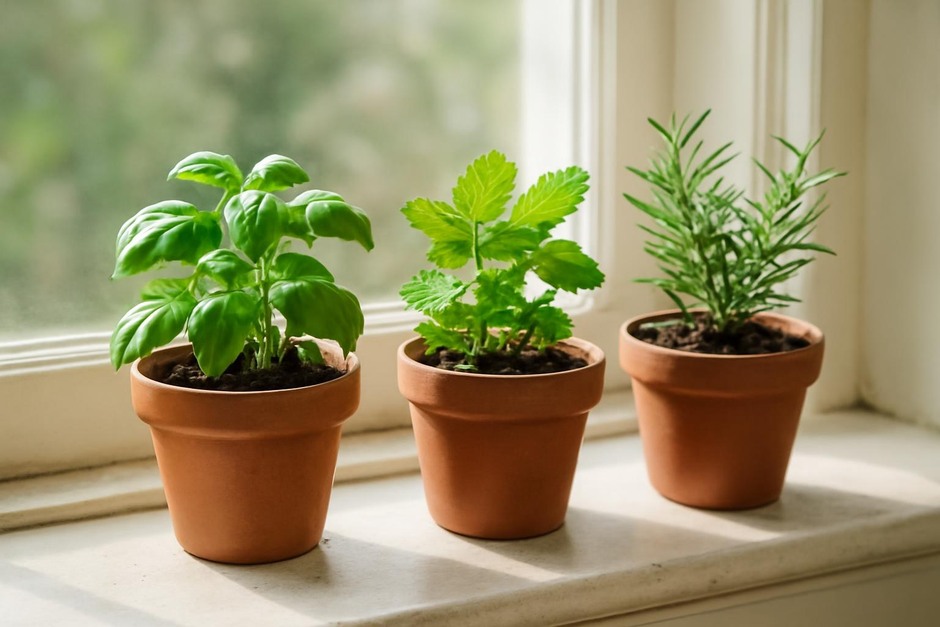
Working with herbs at home becomes less mysterious if you treat the learning process like a set of mini experiments. Each one focuses on a single principle and can be completed in a few days to a few weeks. Together they build the practical skill of keeping a resilient windowsill herb patch that responds well to small, regular care.
Why these experiments?
Each experiment isolates a variable you’ll encounter in everyday herb care: starting new plants from cuttings, developing strong root systems in small pots, and managing growth cycles so you always have fresh leaves. Try them in sequence and compare results — that comparison is the point.
Experiment 1: Water propagation for quick starts
Goal: Learn how easily some herbs produce roots in water and which ones need different treatment.
Materials
- Three healthy stems each of basil, mint, and rosemary (about 8–10 cm long)
- Clear jars or glasses
- Sharp scissors or pruning shears
- Fresh water
Procedure
- Cut just below a node (the little bump where leaves join the stem). Remove lower leaves so no foliage sits in the water.
- Place one stem of each herb in its own jar filled with fresh water. Keep jars on a bright windowsill out of direct hottest sun.
- Change the water every 2–3 days and note any rooting progress by photographing or sketching every few days.
What to observe
- Basil and mint typically show roots within 7–10 days. Rosemary roots more slowly, sometimes not at all in water.
- Note root thickness and branching. Thicker, branching roots indicate a strong start for potting.
Principle learned: Some herbs root readily in water; others prefer soil or cuttings with a rooting medium. This tells you how to start new plants with minimal effort.
Experiment 2: Root training in small pots
Goal: Observe how pot size and soil choice affect root development and early growth.
Materials
- Two small pots (8–10 cm) and one slightly larger pot (12–14 cm)
- Light, well-draining potting mix (you can mix 2 parts potting soil with 1 part perlite or grit)
- Plants rooted from Experiment 1 or small nursery herbs
Procedure
- Plant identical stems (same herb and size) into the different pots using the same amount of soil packing.
- Water to settle the soil, then place all pots on the same windowsill to keep light consistent.
- Record weekly: new leaf count, stem thickness, and how dry the soil feels at 3 cm depth.
What to observe
- Smaller pots force roots to fill the space faster and can lead to quicker top growth initially.
- Too small a pot dries out quickly; note how often you need to water. The larger pot gives steadier moisture but can slow early growth.
Principle learned: The right pot size balances root development and moisture stability. For a windowsill patch, choose slightly snug pots for fast starts, then repot if growth becomes root-bound.
Experiment 3: Pruning for bushy growth and succession
Goal: Practice pruning techniques that encourage bushier plants and extend harvests over weeks.
Materials
- One bushy basil or mint plant (from Experiment 2 or nursery)
- Clean scissors
- Journal or notes
Procedure
- Identify two stems: one you will pinch the top off (cut just above a node) and one you will leave untouched as a control.
- Pinch or snip the top 1–2 cm of the chosen stem weekly and use the cut leaves in cooking.
- Track new side-shoots, leaf size, and time to next harvest over four weeks.
What to observe
- The pruned stem should produce more lateral shoots and a denser overall plant shape.
- Note any delay in flowering (bolting) and how pruning affects leaf flavor and quantity.
Principle learned: Regular, light pruning redirects energy from vertical growth into many productive side shoots, giving a steadier harvest and a more compact plant suited to small spaces.
Bringing it together
Compare your notes from each experiment. You’ll begin to see simple rules: which herbs root best for your conditions, how pot size affects watering rhythm, and how pruning modifies growth. These experiments are compact: together they teach propagation, potting, and maintenance — the core skills for a resilient windowsill herb patch.
Keep a small notebook or photos to repeat variations later (different soils, light angles, or herbs). Over time you’ll refine techniques that fit your windowsill’s light and your kitchen routine.